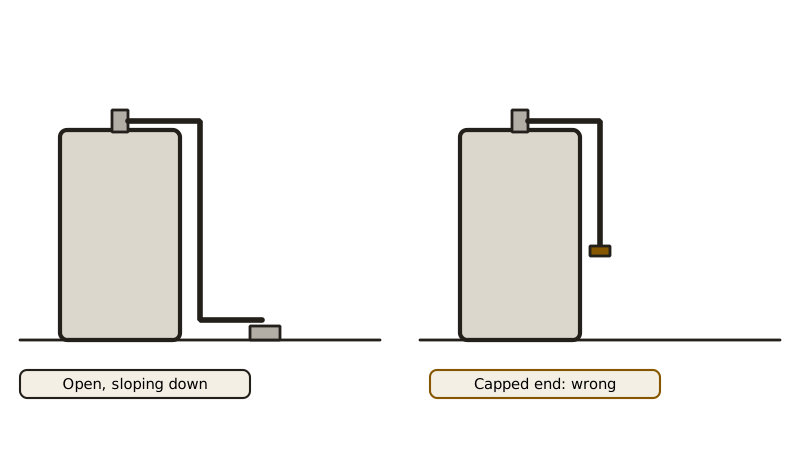
A relief valve earns replacement when it drips steadily after a test, looks crusted or corroded, or has a lever that will not budge. Before you order one, though, work out why it opened. A valve that discharges repeatedly is often telling you about pressure or heat, and a new valve will not change that. Everything we arrange for tanks and tankless units is listed under water heaters.
When does a relief valve actually need replacing?
Replace it when it keeps dripping after a test, when mineral crust or corrosion covers it, when the lever is stuck, or when it does not seal after discharging. An occasional drip may be a reaction to thermal expansion, not a failing valve.
Watch for these signs:
- A wet or crusty pipe end at the discharge line, with no recent test.
- A valve body that is green, white or rusty.
- A lever that is stiff, frozen or snapped off.
- Hot water running from the pipe, not just a drip.
- Hissing, steam or scalding water around the top of the tank: shut the heater off at once.
Minerals in the water can leave deposits. Cucamonga Valley Water District measured total hardness of 109 to 142 ppm in 2025, so scale on a valve seat is plausible over time, though I cannot say how fast it happens in any one house.
How should the discharge pipe be run?
From the valve, the discharge pipe runs to a suitable open drain, sloping downward all the way, at least as large as the valve outlet, with nothing to restrict it. Rheem's manual adds that the end must not be threaded or hidden, should be shielded from freezing, and takes no valve, restriction or reducer coupling.
The same manual wants discharge routed away from live electrical parts and people, and its drawing shows an air gap at the end. Where the pipe finishes matters: hot water from a garage or closet valve should reach a drain, not a wall or the floor.
A capped pipe, a threaded end or an uphill run needs correcting by a plumber. Any of those means a past installation cut a corner.
How is a relief valve replaced?
The plumber cuts power or gas, closes the cold supply, relieves pressure and drains water until the level sits below the valve. The old valve comes out, the threads are prepared, and a new valve of the correct rating goes in and connects to the discharge pipe. Then comes refilling, bleeding air and checking for drips.
Order matters more than speed. Tank water can scald, the threads sit in a tight spot, and the discharge pipe has to be right. Turning an electric heater on before the tank is full can damage an element, which is why sequence counts. On a gas heater, the gas control and flue get a look too.
The visit ends with a lever test and a hunt for drips at the thread and discharge line. Ask to see the valve rating and the discharge run, and file the receipt with the heater's paperwork.
How often should the valve be tested?
Rheem's manual calls for lifting and releasing the lever, near the top of the heater, at least once a year so the valve works freely. Several gallons should flow through the discharge line, and the manual warns that the water can scald, so nobody should stand near the discharge end.
Put a bucket under the discharge end or watch the drain, then let the lever snap shut. If it drips afterward, a bit of debris may be stuck, so lift it once more. If it keeps dripping, the valve needs attention.
Some contractors suggest replacement about every five years. That appeared only in secondary sources, not in the manuals I read, so ask what is recommended for your model. Pair the test with the yearly anode rod inspection.
Does a valve replacement need a permit?
I cannot say for certain. Water heater replacement needs a permit in California, but a like-for-like valve swap may be treated differently, and rules differ by city. Rancho Cucamonga's Building and Safety office takes permits online; its line, (909) 488-4668, can tell you how a valve-only job is treated.
The plumber should know the local answer, and a job needing a permit requires a contractor license in California. Ask who applies if one is needed. When the valve goes in with a whole new heater, the permit normally covers the entire job, and the heater must be braced or strapped.
Upland addresses go through that city's Building and Safety Division at (909) 931-4110. If you are unsure which city your address falls in, your tax bill will say.
Can I replace a relief valve myself?
In my view, no. The valve is a safety device, the water behind it can scald, and a wrong rating or a blocked discharge turns a small error into a hazard. Gas piping and permit work belong to a contractor in California, and a valve swap often arrives bundled with other water heater repair.
A handy owner could physically change one, but I would not advise it. For money questions, water heater replacement cost covers the wider picture; I have no sourced price for a valve alone, so none appears here.
Call at once for a valve that is gushing, a tank that hisses or rumbles, or a gas odor. With gas, exit the house and ring SoCalGas, 1-800-427-2200, from outside. For active flooding, emergency water heater repair lists first steps.
What should I check before blaming the valve?
Most repeat drips trace to one of three causes: expansion in a closed system, supply pressure running high, or a thermostat set too hot. Rule each out before buying a part. Per Rheem's manual, regular discharge may come from thermal expansion in a closed water system, and a new valve will not correct it.
"Closed" means heated, expanding water has nowhere to go because a check valve or regulator stops it flowing back toward the street. The manual's suggested remedy is an expansion tank on the cold line. Such a tank is often needed, but I will not call it a code requirement.
Pressure counts as well. CPC 608.2 caps fixtures at 80 psi, and a tired regulator can let it creep up; a cheap gauge on a hose bib reveals it. Related reading: adjusting a pressure regulator valve and low water pressure.
What does the relief valve do?
Its job is to open and vent water when the tank overheats or pressure spikes, so the shell never ruptures. Rheem's manual says its heaters ship with a combination valve meeting ANSI Z21.22/CSA 4.4, and that the valve's pressure rating cannot exceed the tank's maximum working pressure.
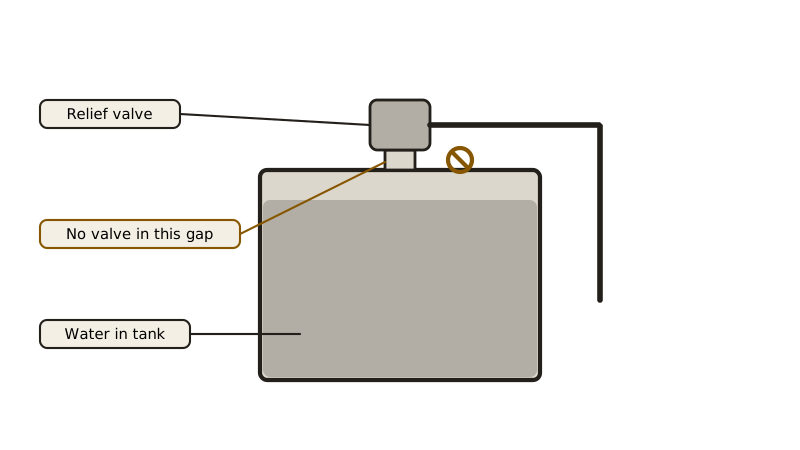
Rheem also says the valve's heat rating must not be lower than the input rating of the water heater, which is why you cannot swap in any valve that fits the thread. A replacement has to match the rating plate, and a wrong rating is a safety risk.
Nobody should block, cap or plug it, since nothing else protects the tank. Rheem's manual is blunt: leave the outlet open, and put no valve of any kind between the relief valve and the tank.
Common questions
How long should a valve swap take?
Shorter than replacing a heater, since the tank is only partly drained, the valve changed, and the system refilled and checked. I cannot verify a set time, so request an estimate with the quote, and expect hot water to be off for part of the visit.
Which questions are worth asking beforehand?
Get a contractor license number and look it up at cslb.ca.gov. Then ask which valve and rating will be fitted, whether the discharge pipe will be checked and fixed, whether an expansion tank is advised, and whether a permit applies. Have the replies written on the quote.
Must someone be at the house?
Yes, an adult should show the plumber the heater and shutoffs and approve the work. Clear room around the tank and mention pets or access limits in the request. Hot water will be off for part of it, so schedule showers around the job.
For the wider picture, start with Cucamonga Peak Plumbing.
Updated