Gas piping is the one part of home plumbing where a mistake can hurt people, so the rules are strict and the work is not a do-it-yourself job. We arrange for a local plumber to visit, look at the appliance and the pipe, and quote the work in writing. Most calls are for a new line to a range, dryer, fireplace or outdoor grill, a repair, or a move during a remodel. Back on the home page you can see the other services, or start with the quote request.
Do regular plumbers do gas lines?
Often, yes. Many plumbers work on gas piping alongside water and drain lines, but not every plumber does. Ask whether the contractor takes gas jobs before you book, because it affects who comes and what the quote covers. In California, gas piping work normally calls for a contractor license and, for new lines or changes, a permit.
Gas line installation, repair and replacement all fit under that. A plumber who does gas work will size the pipe to the appliance load, test it for leaks under pressure and arrange the city inspection when a permit applies. Furnace and air conditioning work is a separate trade, though the plumber can run the supply pipe to it. Ask to see the contractor license number and check it online before the visit.
Who supplies the gas, and where does the homeowner's pipe start?
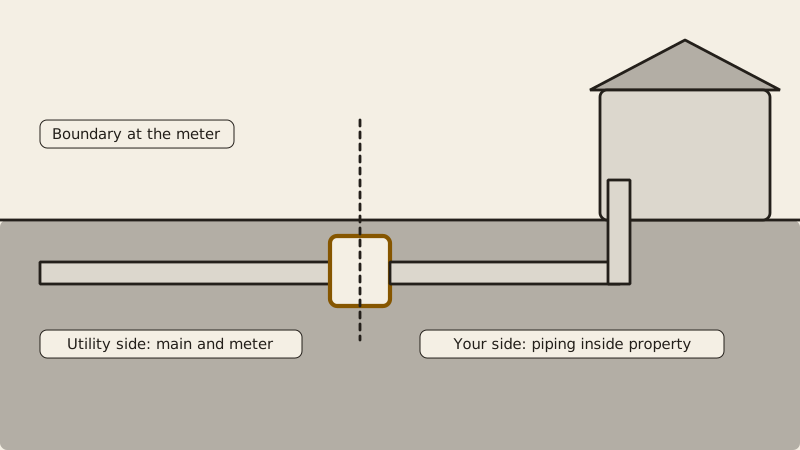
SoCalGas serves Rancho Cucamonga, Cucamonga, Etiwanda, Alta Loma and Upland, according to its list of cities served. The utility handles its own mains and meter, and the piping inside your property is the part a plumber works on. If you are unsure where the utility's side ends, ask SoCalGas before anyone digs or cuts.
Mount Baldy is different. Wikipedia reports that there are no natural gas lines there and homes use propane, and Mount Baldy is not on the SoCalGas list, so the work there involves a propane supplier instead. San Antonio Heights is also not on the list, so check your own bill to see who supplies your gas.
If you smell gas, leave the building and call SoCalGas on 1-800-427-2200 from outside. The same line handles a suspected carbon monoxide problem. Call 911 if you cannot reach them. Do not use switches, lighters or a phone inside.
What does a gas line plumber actually install or fix?
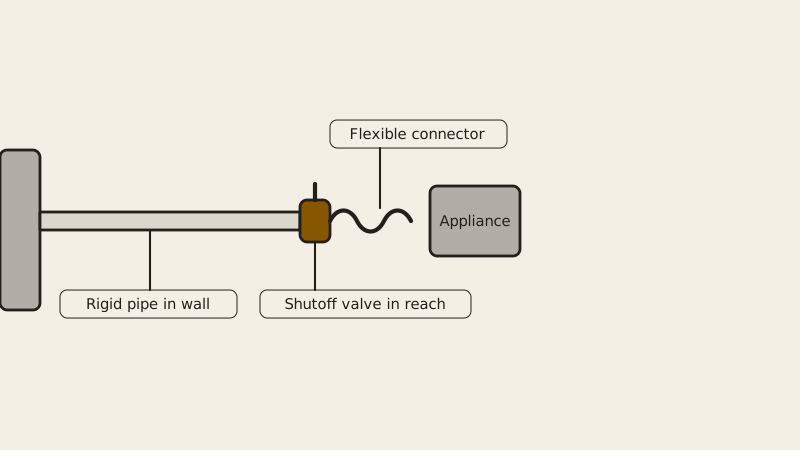
Typical jobs are a new line to a range or cooktop, a dryer hookup, a gas fireplace or fire pit, an outdoor grill or pool heater, a water heater swap, capping an unused line after a remodel, and moving a line when a kitchen layout changes. Repairs include replacing a corroded section or a worn flexible connector.
Details that matter on each:
- Stove or range: the plumber sizes the pipe, adds a shutoff valve within reach and checks the connector.
- Fireplace or fire pit: these need correct pipe sizing and a shutoff, and a gas fireplace may need a key valve.
- Capping: the plumber caps with a proper fitting, not a plug of tape, and pressure tests.
- Moving a line: it often needs a permit, since the pipe path changes.
- Combustion air: gas appliances in a closet or tight utility room need enough air for burning fuel and venting, which is why a plumber checks the space.
Flexible gas lines are another topic, and the earthquake shut-off valve page explains the automatic valve that closes after strong shaking.
Which gas jobs need a permit and a contractor?
Any new gas line, a change to an existing one, and many appliance replacements need a permit and an inspection by the city. In Rancho Cucamonga the permits come from Building and Safety, which says it does not issue permits over the counter and handles the process online. In Upland the Building and Safety Division handles it, with applications online.
California requires a contractor license for jobs of $1,000 or more in labor and materials and for any job that needs a permit. Gas piping fits that second test. Ask the contractor for the license number, look it up on the Contractors State License Board site, and ask who pulls the permit. Skip anyone who suggests skipping the inspection, because an unpermitted gas line can cause trouble with insurance and with selling the house.
How long do residential gas lines last?
I could not find a verified lifespan figure, and it depends on the material. Black iron and steel pipe can corrode, flexible connectors wear out and should be replaced when you replace an appliance, and buried lines are most exposed to moisture and soil. Age alone is not a reason to replace a line. A pressure test and an inspection are.
A plumber will check for rust, loose fittings, damaged connectors and any odor. Signs of trouble include a rotten-egg smell, hissing near a pipe, dead vegetation over a buried line, or a pilot that keeps going out. Report any of those right away. Natural gas is given an odor so leaks are noticeable, but a faint smell should never be dismissed.
How deep is a gas line buried to a house?
Burial depth is set by the code and by the utility, and varies by pipe type and location, so a verified single figure does not apply to every yard. The plumber and the city inspector decide the depth for your job. Do not dig near a gas line, and call 811 before any digging so lines are marked.
If a new buried line is needed, the quote will include trenching, and trenching is priced per foot and rises with depth, rock and hardscape such as concrete or pavers. Foothill lots with slopes, rocks or retaining walls cost more to trench than flat suburban yards, and the plumber will assess this on the visit.
How much does a gas line cost?
One national guide puts gas line installation at $120 to $1,350, with an average of $558. Appliance runs come to roughly $15 to $25 per foot, trenching adds $4 to $12 per foot, and repairs range from $120 to $250 behind a stove to $1,500 to $5,000 for a buried line. Another guide lists a typical gas line repair at $250 to $750.
For a detailed look, see the gas line cost guide. It breaks down what pushes the price up or down. These are national guides, so treat them as orientation. The written quote from a local plumber after seeing your house sets the real price.
How much does it cost to install plumbing in a house, or replace all the gas lines?
New plumbing in a house is a larger project that runs well above a single gas line, and the price depends on the number of fixtures, the home's layout and local labor rates. Replacing every gas line in a house is priced by the foot and by the number of appliances, so a quote needs an on-site look.
A whole-house gas replacement means new pipe from the meter to each appliance, tested and inspected. The work is often done together with a remodel or a water line repiping so walls are opened only once. Ask for the quote to list each appliance and each run separately, so you can compare bids. The page on repiping a house covers the water side of that decision.
Can a plumber cap, move or add a gas line?
Yes. A plumber can cap an unused outlet, move a line when you shift an appliance, or add a branch for a new one. All three change the existing piping, so they normally need a permit, an inspection and a pressure test before the gas goes back on.
Capping looks simple but is not: the cap has to be rated for gas and the line tested before anyone relies on it. A moved line has to be sized for the new route and appliance. If you want a gas stove where an electric range stood, the plumber also has to check that the meter and the existing line can carry the extra load.
Common questions
How long does gas line work take?
A short repair or appliance hookup often takes a few hours. A new line to a stove or dryer may take half a day. Longer runs, trenching or a whole-house replacement take a day or more, plus the wait for the city inspection when a permit applies.
What should I ask before I hire someone for gas line work?
Ask for the contractor license number and check it with the state board. Ask whether the price includes the permit and inspection, how the line will be pressure tested, what pipe material is used, and what happens to the old line. Get everything in writing before any work starts.
Do I need to be home during gas line work?
An adult should be there to let the plumber in, show the appliance and the meter, and approve the price. Gas is usually shut off during the work and relit afterward, so plan to be home for the inspection and for relighting pilots where needed.
More in this guide
Sources used
Updated