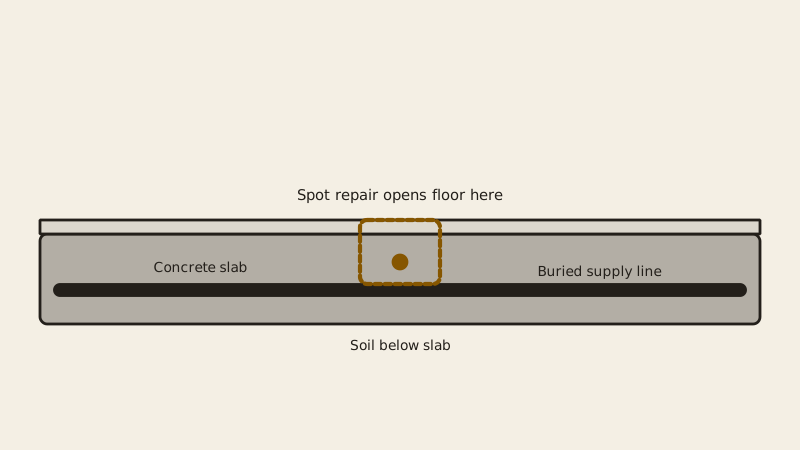
Fix the leak you have, or replace the pipes that keep failing. One isolated leak in otherwise healthy lines usually calls for a spot repair or a short tunnel. Leak number two or three within a few years leans toward rerouting or a full repipe. Background sits on the leaks and burst pipes page, and the quote page is where you request a visit with the scope on paper.
Should I repair one slab leak or repipe the whole house?
Repair when the pipes are otherwise sound and this is the first leak. Repipe when leaks keep coming back, when a plumber finds widespread pitting or thinning, or when several repairs would cost close to the price of new lines. A written quote that prices both options side by side is the only fair way to decide.
Think of it as a count and a condition question. How many leaks have there been, and where? What do the pipes look like where they were opened? A plumber who has already cut into the floor once can describe what they saw. Ask for photographs.
Insurance can tip the balance. Some policies pay for the access and tear-out around a sudden leak but not for the pipe itself; the wording differs, so read yours or call the agent before work starts. Do not wait on a decision while water runs: shut the main first.
What are the signs the leak is beneath the floor?
Four clues tend to travel together: a meter dial creeping while every tap is closed, a hiss of water in a silent house, a warm patch of floor or a damp spot on carpet or tile, and a bill that jumped with no change in habits. Any single one deserves a closer look.
The EPA suggests a home check: note the meter reading, keep every fixture off for two hours, then look again. If the number moved, water is escaping somewhere past the meter, not necessarily below the floor. Rule out toilets first with a few drops of food coloring in the tank; color in the bowl after about 10 minutes means a leaking flapper.
Other clues: cracking tile, a baseboard that stays wet, hot-water pressure dropping while cold stays fine, or a musty smell. Confirming the exact spot takes acoustic listening gear or thermal imaging, which explains why detection appears as its own line in the cost table.
How is a slab leak actually fixed?
Three routes are common. A spot repair opens the floor directly over the leak. A tunnel is dug beneath the slab from the yard to reach the pipe. A reroute retires the failing line and feeds the fixtures with new pipe run through walls or the attic. The right pick depends on leak position, floor finish and the age of everything else.
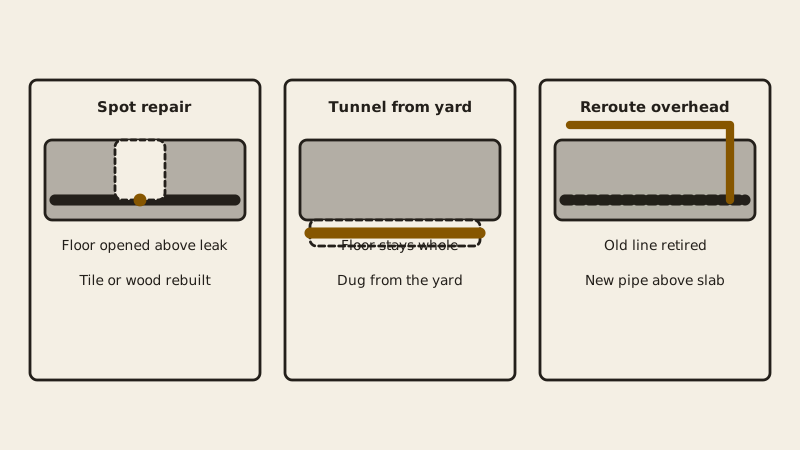
- Spot repair: Quick, and often the lowest price, but it breaks tile, hardwood or carpet pad, and rebuilding the floor is a real expense.
- Tunneling: The floor stays whole, though the crew needs yard access and extra time, and longer runs cost more.
- Reroute: Picked when the buried line is aging or has leaked before, or when the floor finish is expensive to disturb.
- Epoxy lining: Some companies offer it for certain pipe layouts. Ask whether it suits your pipe material, how it is warranted, and whether the city accepts it.
On permits: Rancho Cucamonga's Building and Safety office takes applications online. Find out who applies for yours.
What do these options cost?
One cost guide, published in September 2026 by a Texas plumbing and foundation company that cites Angi, Fixr and HomeGuide, shows detection at $150 to $600 and a spot repair through finished flooring around $2,000 to $5,000 including build-back. Tunnels and reroutes cost more, and a whole-house repipe spans $1,500 to $15,000, commonly near $7,500.
| Option | Figure in that guide | Notes |
|---|---|---|
| Leak detection | $150 to $600 | Charged separately from the repair |
| Spot repair through floor | about $2,000 to $5,000 | Includes build-back; a simple accessible fix can be far lower |
| Tunneling, 8 to 15 feet | $4,000 to $7,500 | Example lengths from Texas contractors |
| Reroute of one line | $3,900 to $7,500 (HomeGuide) up to $4,000 to $15,000 (Fixr) | Sources disagree |
| Whole-house repipe | $1,500 to $15,000, most near $7,500 (Angi) | Pipe material and bathroom count matter |
These are not California prices and the guide itself does not reconcile its own ranges. Rates in Rancho Cucamonga may differ.
Floors drive the spread. Tile and hardwood cost more to rebuild than carpet, a leak near a bathroom cluster costs more to reach, and a longer tunnel costs more per foot. What settles your number is a written quote from a local plumber, with detection, repair, build-back and permit each on a separate line.
How do you repipe a house built on a slab?
The common approach leaves the old buried lines unused and routes new pipe above, through the attic and down inside the walls, so the concrete is never cut. New pipe is typically PEX or copper, each with trade-offs in price, noise and lifespan. Wall patching follows, and a permit is part of the job.
The comparison of materials lives in PEX vs copper. Homes in this part of the Inland Empire span several decades, so what you have today varies: some will have older copper, others newer PEX with different failure points. Ask the plumber what they found, not just what they plan.
Also ask how many connection points are replaced, whether the shutoffs and pressure regulator come with the job, and who patches and paints. Pricing logic is in repipe house cost; the work itself is described in repipe house.
Is a leak through a concrete roof deck a plumbing job?
Usually not. Water coming through a flat concrete roof is typically a waterproofing or drainage matter, not a pressurized pipe, so a roofing or waterproofing contractor fits better. A plumber matters when a roof drain, rooftop pipe or mechanical line is the source, more common in commercial or multi-unit buildings.
Watch whether a stain below grows when it rains. If so, weather is the cause. If it grows when people use water, a supply or drain line is leaking. Ceiling water leak shows how to sort the two.
How many days will the work take, and what gets disrupted?
Expect days rather than hours for anything beyond a simple fix. The cost guide I read says most tunneling jobs wrap up in three to five business days, and rooms in the work zone can be unusable for days. Rerouting leaves wall and ceiling patches, adding trades and drying time before paint or flooring.
Water will be shut off for stretches. Ask how you will get water meanwhile, how dust is kept out of other rooms, and when the new lines get a pressure test. Clear furniture and rugs from the work area beforehand.
A written schedule is useful, but nobody can fix a completion day before the floor is opened. Ask for the plan alongside your quote.
Common questions
What is a realistic timeline?
Per one cost guide, most tunneling jobs finish in three to five business days, and a short tunnel by an exterior wall may take one or two. Spot repairs and reroutes vary with floor finishes and wall patching. Get a timeline on paper and expect it to shift if more damage turns up.
What belongs on my question list for the plumber?
Get the contractor license number and look it up at cslb.ca.gov; a license is mandatory here once a job passes $1,000 or needs a permit. Then ask how they will pinpoint the leak, who applies for the permit, whether floor rebuilding is in the quote, and how a second leak would be handled.
Will someone need to stay at the house?
Yes, at least at the start: an adult shows access, the main shutoff and the affected rooms, and approves the scope. Over a multi-day repair, someone should be around to open the door each morning. Mention gates, dogs and alarm codes when you request the visit.
More services are listed on Rancho Cucamonga plumber.
Sources used
- Quality Foundation and Plumbing, slab leak repair cost guide (Sept 2026, citing Angi, Fixr, HomeGuide)
- EPA WaterSense, Fix a Leak Week (meter test and leak figure)
- City of Rancho Cucamonga, Building and Safety
- California Contractors State License Board
- US Census Bureau, housing units by year built, via Census Reporter
Updated