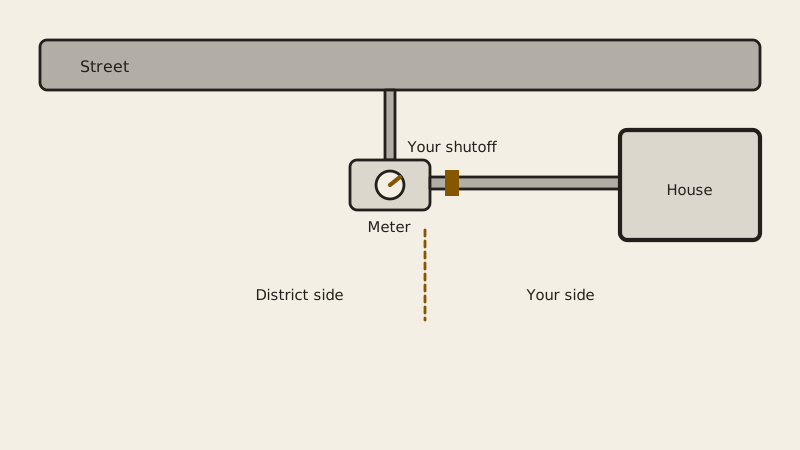
A burst pipe usually announces itself with sound, wet surfaces or a sudden loss of pressure. If water is pouring out, close the main valve first and sort out the cause second. If nothing is visibly wet but the bill jumped or the meter will not sit still, you may have hidden leaks. This page sits under leak and burst pipe help and walks through both cases for homes in Rancho Cucamonga.
What are the signs that a pipe has burst?
The clearest signs are water you can see, a stain that spreads on a ceiling or wall, a hissing or running sound with every tap closed, and taps that suddenly deliver little or no water. A burst line also leaves musty smells and warped flooring within a day or two.
Look and listen in this order:
- Sound: put your ear near walls and the floor with the house quiet. A steady hiss or trickle with nothing running is a red flag.
- Stains: brown rings, bubbling paint or soft drywall, especially below bathrooms and the kitchen.
- Flooring: cupped planks, loose tiles or carpet that feels damp underfoot.
- Pressure: a drop at every fixture at once, not just one tap.
- Smell: a damp, earthy odor in a closet or garage wall.
A ceiling stain with no obvious source is covered separately on the page about a ceiling water leak.
How do I confirm it with the water meter?
Turn off every tap and appliance, note the reading on the meter, wait two hours without using water, then read it again. The EPA says that if the number moved you probably have a leak. Many meters also have a small leak indicator that spins or flashes when any flow passes through.
Write down both readings and the time. If the meter is still moving after the main valve inside the house is closed, the leak is between the meter and your shutoff. If it stops, the leak is past the shutoff, inside the house or under the slab.
Ownership matters here. The Cucamonga Valley Water District says it is responsible for the service line from the street main up to and including the meter, while the customer is responsible from the meter to the house. If water is bubbling out of the ground by the meter box or the sidewalk, call the district rather than a plumber. Outside the district's service area the line is different, so check your bill for your supplier.
Before you start: what to have ready for a plumber
Before booking, have the meter readings, the time the problem began, photos, the location of the shutoff, and the age of the house. The plumber will decide between a patch, a section replacement or a larger repair, and then give you a price in writing before work starts.
Mention whether the leak is on hot or cold, whether it is inside the house or outside, and whether anything has been shut off. If the house has older pipe, say so. For ongoing problems in several places, the plumber may suggest repiping the house instead of repeated patches, and will explain why.
Tell the plumber about water damage too, since drywall, insulation and flooring work usually belongs to other trades. When you are ready, send the details through the quote request, or read the page on an emergency plumber for a burst pipe if water is still running.
What do I do in the first ten minutes?
Shut the main water valve, open a low faucet to drain the lines, switch off the water heater and, if water is near outlets or the panel, cut power only if you can reach the breaker without standing in water. Move belongings out of the wet area and photograph everything before cleanup.
Do these in order:
- Close the main shutoff. It is often a ball valve or a round wheel near the front of the house at the meter or on the garage wall.
- Open the lowest faucet and a hot tap to relieve pressure.
- Turn the water heater to off or pilot, so it does not run dry. For a gas heater, use the control dial rather than the gas shutoff unless you smell gas.
- Photograph the damage and the pipe before you touch anything.
- Call a plumber, and your insurer if water has reached walls or floors.
If you smell gas at any point, leave the building and call SoCalGas on 1-800-427-2200 from outside. Call 911 if you cannot reach them.
How can I tell if a pipe burst under the house or in the slab?
Slab and crawl space leaks hide. The tell-tale signs are a warm patch on the floor, the sound of running water under the house, a water bill that climbs with no change in habits, and a meter that moves when everything is off. In homes with a crawl space, damp soil or a wet subfloor often points to the spot.
A warm spot on a tile or concrete floor suggests a leak in a hot water line. A wet baseboard that returns after you dry it points the same way. Slab leaks are common enough in homes of this region that the plumber will usually bring electronic listening gear to pinpoint the break before cutting anything. Read the guide on slab leak repair or repipe before you agree to a large job.
Your water bill is evidence. Compare this month with the same month last year. The EPA says the average household loses more than 9,300 gallons a year to leaks, and about nine percent of homes leak 50 gallons a day or more, so a sharp jump deserves a meter test. More on that in why a water bill is so high.
Can you fix a leaking pipe yourself?
For a small leak, a temporary clamp or repair sleeve can hold until a plumber arrives, and homeowners can legally do some repairs on their own home. But California requires a contractor license for jobs of $1,000 or more, or any work needing a permit, and a burst main or a slab break is not a weekend task.
Reasonable do-it-yourself steps: turn the water off, dry the pipe, fit a rubber-and-clamp patch or a push-fit coupling sized for that pipe, and turn the water back on slowly. Treat it as temporary. A patch over corrosion often fails again nearby, because the pipe around it is just as thin.
Stop and call a plumber if the pipe is inside a wall, under a slab, near gas or electrical equipment, or if you see green or white crust on copper, which signals corrosion in more than one place. A guide to the repair itself is on the page for a pinhole leak in copper pipe.
How do I fix a leaking pipe joint without replacing it?
Tighten first. A weeping threaded joint often stops with a quarter turn and fresh thread tape or paste after you drain and dry it. A sweated copper joint that drips can be reflowed once the line is fully drained, and a push-fit fitting can be swapped without soldering. If the pipe wall itself is cracked or the joint is corroded, a section has to be cut out.
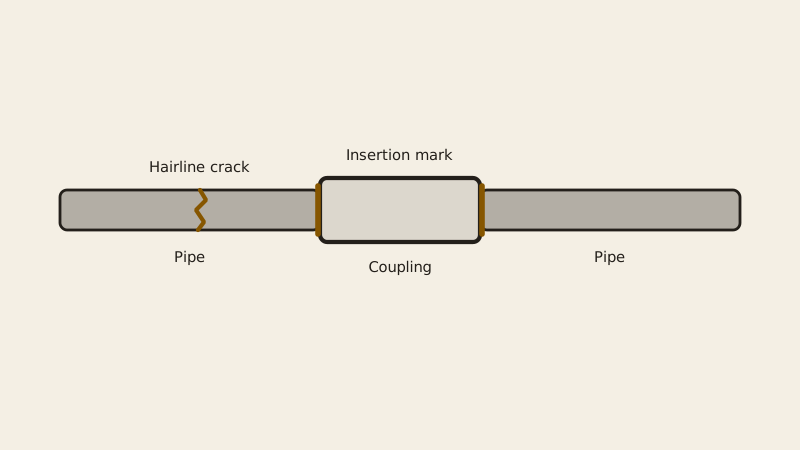
Steps for a push-fit or compression fitting:
- Shut the main and drain the line.
- Dry the joint and look for a hairline crack in the pipe, not just the fitting.
- Remove the fitting, cut back to clean pipe and deburr the edge.
- Fit a new coupling and mark the insertion depth.
- Open the valve slowly and watch the joint for ten minutes.
If you are not sure what the pipe is made of, bring a photo to the hardware store or ask the plumber. Mixing metals, such as copper straight into galvanized steel, can corrode quickly.
Common questions
How long does it take to repair a burst pipe?
A simple repair on an accessible pipe often takes a few hours. Opening a wall, replacing a long run or tracing a slab leak can take a day or more. Drying out the wet area afterward takes longer, often several days with fans and dehumidifiers.
What should I ask before I hire someone to fix a burst pipe?
Ask for the contractor license number and look it up on the CSLB site, whether the price is in writing, whether permit costs are included, what happens if a second leak shows up, and who repairs the drywall afterward. Also ask how the work is shut down if the plumber finds that the pipe is worn throughout.
Do I need to be home while a burst pipe is repaired?
You need to be there at the start to show where the water shuts off and where the damage is, and to approve the written price. After that, many homeowners step away if someone trustworthy can let the plumber in. If the repair involves walls, keep pets and children clear of the work zone.
For the wider picture, start with Cucamonga Peak Plumbing.
Updated